Beyond the Room
- 4.8
- Rating
- 1.00M
- Installs
- Free
- Price

 Analysis by App-foxy
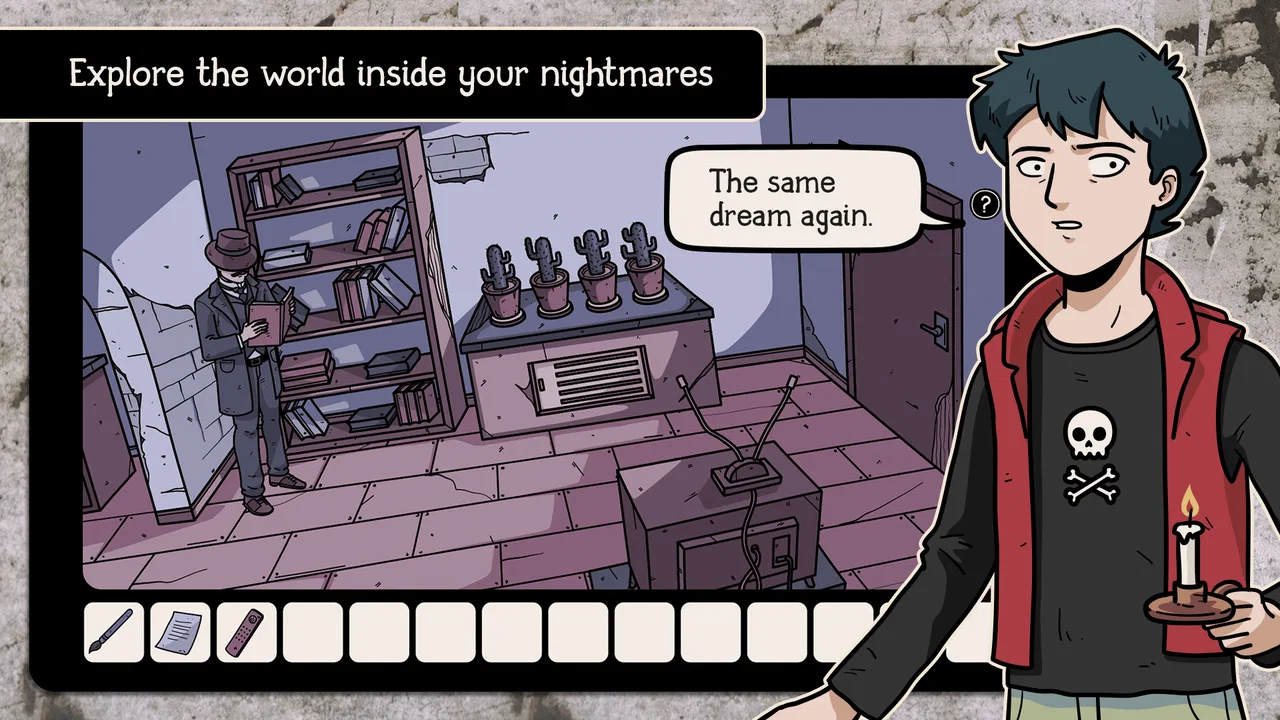
I spent time with Beyond the Room as a story-driven adventure game built around examining an abandoned building and working through an escape-room-style mystery. It comes from Dark Dome, a developer with a clear interest in atmospheric puzzles rather than fast action. My first impression was that this is best approached as a quiet, close-reading experience: you inspect rooms, connect clues, and decide what deserves another look instead of rushing from one challenge to the next.
That focus makes it appealing to players who enjoy noticing small details and solving problems at their own pace. It is free to start, carries a Teen content rating, and includes in-app purchases priced at $1.99 per item. The game has reached over a million installs and holds a 4.8 average from roughly sixty-four thousand ratings, which suggests that its particular blend of mystery and escape-game structure has found a substantial audience. I can understand why, although the same deliberate design that makes it satisfying can also create friction for players who need larger, clearer, or more forgiving interactions.
How clearly the building communicates its mystery
The strongest part of the experience is the way the setting encourages careful observation. The abandoned building is not just a backdrop for disconnected riddles. It gives the investigation a consistent mood, and the act of moving through its spaces feels tied to the central mystery. I found myself scanning corners, returning to earlier locations mentally, and treating ordinary objects as possible pieces of a larger explanation.
You May Also Like

 Blood Strike: 2.5 Anniversary
Blood Strike’s Loadouts Turn Every Drop Into a Tactical Gamble
A close look at Blood Strike’s custom loadouts: how fast access to signature weapons reshapes its battle royale rhythm, rewards preparation, and narrows the gap between fights.

 Pandora - Music & Podcasts
Pandora’s Music Is Easy to Start, but Harder to Recover
Pandora’s strength is its low-effort path from a seed to a station. Its weak spot is how much confidence it asks you to place in connection, setup, and quiet recovery.

 8 Ball Pool
 Is Built on Rivalries, Rematches, and Routine
A close look at the rivalries, rematches, shared routines, and unanswered safety questions that turn a quick pool match into a persistent mobile community.

 Samsung Music
’s Quiet Strength Is Playing What You Already Own
Its reach comes less from spectacle than from dependable access to a personal library. That simplicity is both the app’s strongest retention engine and its ceiling.

 AccuWeather: Weather Radar
AccuWeather Review: A Quick, Clear Forecast for Everyday Decisions
For everyday plans, the best forecast is the one you can understand quickly. AccuWeather makes rain timing, radar, and local conditions easy to act on, with a few trade-offs.

 Hill Climb Racing
Why Hill Climb Racing Still Turns Crashes Into One More Run
A tiny car, a bumpy hill and one more upgrade: Hill Climb Racing keeps resurfacing because its simple chaos makes every near-miss feel personal.
More From Our News Desk
View All News


That approach works particularly well for people who like visual storytelling. Instead of relying only on long explanations, the game asks you to read the environment. A mark, object, or arrangement can matter because of where it appears, not just because it is highlighted as a clue. This gives successful discoveries a satisfying sense of personal deduction. You are not merely selecting the obvious answer from a menu; you are building a theory from what the building shows you.
Navigation is generally understandable once you accept the game’s rhythm. You examine the current scene, test relevant objects, and move between areas when a new connection becomes apparent. The challenge is not usually the number of controls. It is remembering what you have seen and recognizing when an apparently decorative detail has become useful.
For readability, I recommend playing on a screen that lets you inspect the artwork comfortably rather than relying on a very small phone display. This is not because the game is filled with complicated menus. The issue is that visual clues lose their impact when the scene is cramped or viewed in poor lighting. A larger screen can make it easier to distinguish shapes, read short text, and compare objects without repeatedly leaning toward the device.
I also found that the game rewards a simple note-taking habit. When I encountered an unusual symbol, number, or object that did not immediately make sense, writing down a brief description was more useful than repeatedly tapping the same area. This is one of the less obvious strengths of the design: the game respects memory and observation, but it does not require you to keep every detail perfectly organized in your head.
That same quality can become a barrier. If you prefer explicit objectives, frequent reminders, or a constantly visible task list, the investigation may feel vague. The game expects you to tolerate uncertainty for a while. A clue can be interesting before it is useful, and an area that seems finished may become relevant again later. Players who enjoy making their own connections will likely appreciate that; players who want a direct chain of instructions may find it less comfortable.
Reading clues without losing the thread
The most effective way to play is to separate observation from interpretation. First, look at the whole scene and identify anything that seems unusual. Then inspect objects one by one. Only after that should you decide which clue belongs with which puzzle. I found this approach reduced random tapping and made the story easier to follow.
It is also worth pausing after a major discovery instead of immediately searching for the next interaction. The atmosphere works better when you give yourself a moment to understand what changed. In practical terms, this helps players who process information more slowly, because the game does not need to be treated like a timed test. You can approach each room as a small investigation rather than a race.
The game’s visual language is more important than its written explanations. If you have difficulty distinguishing subtle shapes, low-contrast details, or small objects, some puzzles may demand extra effort. I would not describe that as a flaw in every context, because environmental ambiguity is part of the intended mystery. Still, it means the experience is more comfortable for players who can inspect a detailed scene without visual strain.
Motor demands and sensory comfort
From a motor perspective, this is a calmer choice than an action adventure. The core activity is examining locations and interacting with objects, so it does not depend on rapid movement, precise combat, or repeated high-speed gestures. That makes it more suitable for someone who wants a game that can be played in short, deliberate sessions.
However, “slow-paced” does not mean effortless for every player. Escape games often require repeated taps in a small area while you test whether an object is interactive. If accurate touch is difficult, this kind of searching can become tiring even when the underlying puzzle is simple. I would have preferred a more forgiving interaction style in moments where the intended target is visually small or blends into the surrounding scene.
The game is also a better fit for players who enjoy a tense or eerie atmosphere. The abandoned setting creates unease without turning the experience into an action-heavy horror game, but that mood may still be uncomfortable for people who avoid dark environments or suspenseful storytelling. The Teen rating is worth taking seriously when deciding whether it suits a younger player or someone sensitive to unsettling themes.
For sensory comfort, I would play in a quiet room with the device brightness adjusted to the artwork rather than simply turning it all the way up. A very bright screen can make a moody game less comfortable, while a dim screen may hide important details. Headphones are not essential to understanding the investigation, so players who prefer lower sensory intensity can keep the surrounding environment quiet and focus on the visuals and text.
One useful trade-off is that the game’s slower pace gives you control over when to engage. You can stop after examining a room, take a break after a difficult puzzle, and return later with a clearer mind. That makes it more manageable for players who tire during long sessions. On the other hand, if you leave for too long, you may forget which objects seemed suspicious. Keeping a short note before closing the game solves much of that problem.
Playing in everyday situations
I can easily imagine using this game during a commute, while waiting for an appointment, or at home after work when I want something absorbing without the pressure of a competitive match. A short session can focus on one room or one line of reasoning. That makes it more flexible than an adventure game that expects long uninterrupted play, although the mystery benefits from returning with enough attention to remember the evidence.
It is not an ideal choice for every public setting. If you are playing somewhere bright, noisy, or crowded, visual clues may be harder to inspect and the atmosphere may disappear. The game asks for concentration, so it works better during a calm break than during a moment when you need to glance away constantly. I would choose it over a reflex game on a quiet train ride, but not when I expect frequent interruptions.
It can also work as a shared puzzle experience. One person can hold the phone while another points out details or suggests connections. This is especially useful when two players notice different things in the same scene. The trade-off is that the game is designed around individual investigation, so a group may solve certain moments quickly and reduce the feeling of personally uncovering the mystery.
For someone using an older device, the listed minimum operating system is Android 6.0 or later. The current version is 1.0.36, so checking compatibility before installing is sensible if the phone has not been updated in a long time. The game is free, which makes trying it low-risk, but the optional $1.99 items mean that a parent or shared-device owner should be aware of possible purchases before handing it to a younger player.
The free entry point is one of the game’s practical advantages. You can decide whether the atmosphere, clue style, and amount of searching suit you before spending anything. I would not recommend purchasing an item simply because you feel stuck after a few minutes. First, revisit earlier rooms, inspect objects from a different angle, and review any notes you made. The satisfaction of this game comes from understanding the connection, not merely opening the next step.
Who will enjoy it, and who should skip it
I would recommend it to players who like point-and-click investigations, environmental storytelling, and puzzles that ask them to remember details. It is especially suitable for someone moving away from fast mobile games and looking for an experience that rewards patience. Fans of Dark Dome’s style will likely know what kind of mood to expect, but newcomers can approach it without needing a competitive mindset or a large time commitment.
I would be more cautious about recommending it to players who need highly explicit direction. If you dislike revisiting locations, keeping track of clues, or trying an interaction that may not pay off immediately, the game can feel like unnecessary wandering. It is also not the best match for anyone seeking combat, character-building, multiplayer competition, or a large open world. Its appeal is concentrated in atmosphere and deduction.
Compared with a typical hidden-object game, this feels less like a checklist of items and more like an investigation where context matters. Compared with a conventional action adventure, it removes the urgency and physical skill demands, replacing them with attention and memory. Compared with a purely text-based mystery, it gives the building itself a stronger role. That combination is the reason I found it memorable, but it also explains why players who prefer one clear genre may not connect with it.
Barriers that remain after the calm pacing
The biggest remaining barrier is visual precision. A relaxed pace helps with motor demands, but it does not automatically make small or subtle clues easy to see. Players with low vision, color-vision differences, or difficulty distinguishing low-contrast objects may need a larger display and stronger ambient lighting. Those adjustments can help, but they cannot change the fact that environmental detail is central to solving the puzzles.
Memory is another consideration. The game’s design encourages you to retain relationships between rooms and objects. Someone with attention or memory difficulties may find it helpful to keep a written log using plain descriptions such as “locked cabinet near the stairs” rather than relying on screenshots alone. This turns the investigation into a more manageable external process, though it adds work that the game itself does not replace with a detailed journal.
Players who are sensitive to suspense should also decide whether the abandoned-building setting feels intriguing or stressful. The mood is a major part of the experience, not a decoration that can be ignored. If you want a bright, cheerful puzzle game for relaxation, another option would be a better fit. Here, the reward comes partly from staying with an atmosphere that is deliberately uneasy.
Finally, the free-to-play structure deserves a practical note. The game costs nothing to install, but optional purchases are present. That is not unusual for mobile adventure games, yet it matters when the device is shared or when you are trying to keep every game entirely purchase-free. I appreciate being able to begin without paying, but I would still set expectations before playing, particularly with children or anyone who may tap through a difficult moment impulsively.
My inclusive verdict
After playing it, I see Beyond the Room as a thoughtful adventure for people who prefer observation over speed. Its quiet interaction style makes it more approachable than action-focused games for many players with limited tolerance for rapid controls, and its room-by-room structure supports short sessions. The strongest accessibility benefit is not a special mode I can point to, but the fact that the investigation gives you time to look, pause, and return to a problem.
That benefit has limits. The game still depends heavily on seeing small environmental details, reading clues, and remembering where information appeared. It does not suit every visual, cognitive, or sensory need equally well. A larger screen, careful lighting, personal notes, and a quiet setting can make the experience more comfortable, but players who require very direct navigation or strong visual separation may encounter frustration.
My final recommendation is therefore specific: choose it if you want a free, atmospheric mystery that treats patience as a skill and lets you solve an abandoned-building puzzle through careful inspection. Skip it if you need constant guidance, bright presentation, rapid feedback, or action. Dark Dome has made a focused adventure rather than an all-purpose mobile game, and its 4.8 average from more than sixty thousand ratings reflects how well that focus works for its intended audience. For me, the game succeeds because it makes looking closely feel meaningful, while remaining honest about the effort that close looking requires.
FAQs for Beyond the Room
01What is the main objective of Beyond the Room?
Beyond the Room is an immersive puzzle-solving game where players explore different rooms filled with intricate challenges. The main objective is to solve these puzzles by discovering clues and using logic to progress through various levels. Each room offers unique themes and mysteries, keeping players engaged and testing their problem-solving skills.
02Is Beyond the Room available for both Android and iOS devices?
Yes, Beyond the Room is available for download on both Android and iOS platforms. Users can find the app on Google Play Store for Android devices and the Apple App Store for iOS devices. Ensure your device meets the minimum system requirements for optimal performance.
03Does Beyond the Room require an internet connection to play?
Beyond the Room can be played offline, allowing users to enjoy the game without an internet connection. However, certain features, such as updates and online leaderboards, may require internet access. This flexibility makes it perfect for gaming on the go or in areas with limited connectivity.
04Are there in-app purchases in Beyond the Room?
Yes, Beyond the Room offers in-app purchases that enhance gameplay. While the basic game is free, players can purchase additional hints, levels, or special items to aid in puzzle-solving. These purchases are optional and not necessary to complete the game, but they can enrich the overall experience.
05How challenging is Beyond the Room for new players?
Beyond the Room offers a range of difficulty levels, making it accessible to both beginners and experienced players. Early levels introduce players to basic mechanics and gradually increase in complexity. A hint system is available to assist players who may find certain puzzles challenging, ensuring a satisfying experience for all skill levels.
Pros
- Engaging puzzles with varying difficulty.
- Stunning graphics enhance immersive experience.
- Intuitive controls for seamless navigation.
- Regular content updates keep gameplay fresh.
- Offline mode available for uninterrupted play.
Cons
- Some puzzles may feel overly complex.
- Occasional bugs disrupt gameplay fluidity.
- Limited hints can frustrate new players.
- In-app purchases may deter some users.
- Large file size requires ample storage space.

Beyond the Room
Gallery